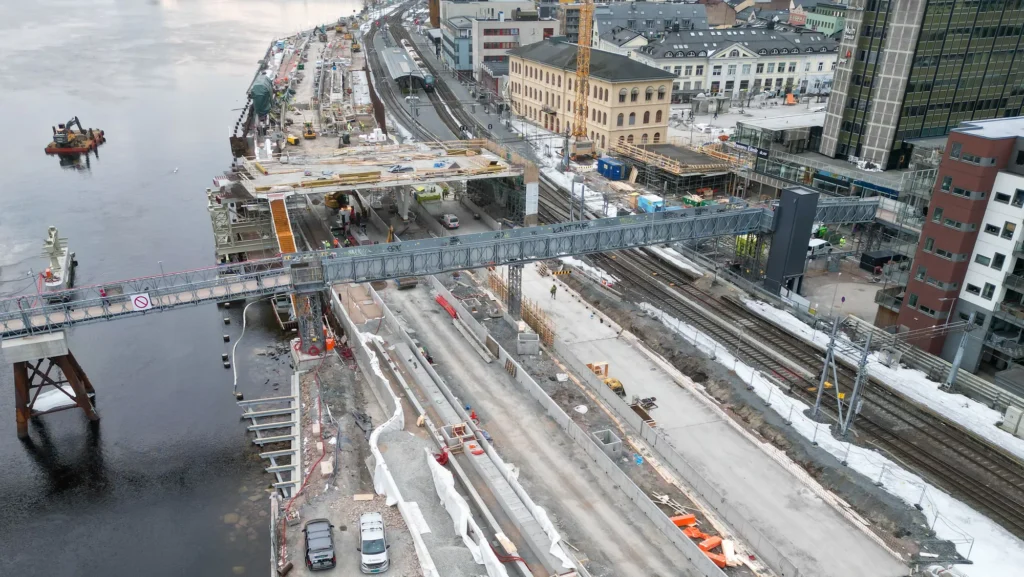
“Lightweight Material. Heavy-Duty Performance.”
Foamit foam glass offers several advantages compared to traditional materials used in railway construction.
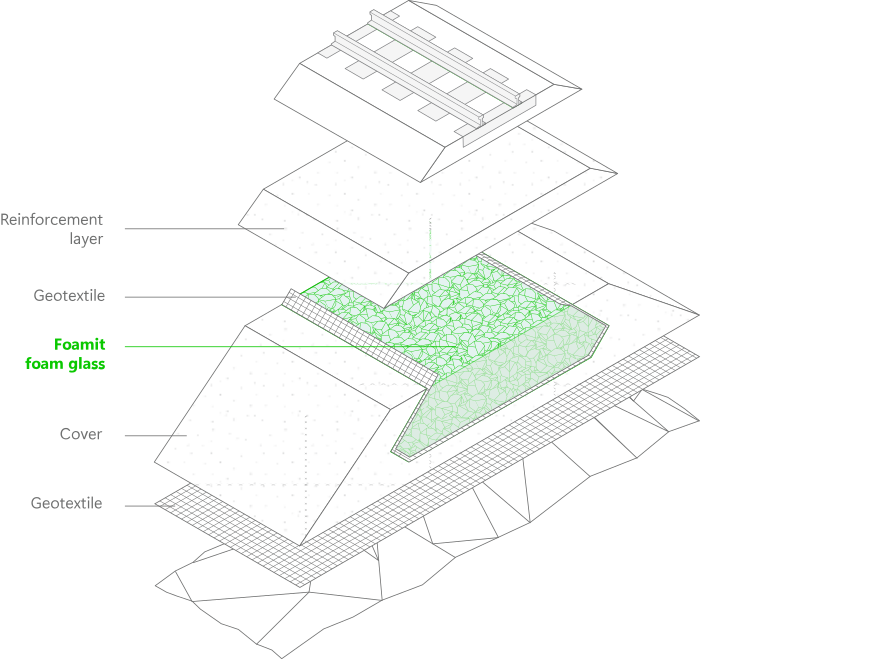
Railway Construction on Challenging Ground Conditions
Like roads, railways often cross areas with challenging ground conditions. To reduce the need for extensive excavation and ground replacement, Foamit foam glass can be used both below the reinforcement layer and as frost protection in railway structures.
Its lightweight properties make it possible to reduce the overall weight of the track structure. Foam glass aggregates provide a stable and durable fill material that can withstand high loads over a long service life.
Benefits of Foamit Foam Glass in Railway Construction
Foam glass aggregates are one of the lightest granular construction materials available. Its low density makes it particularly suitable for railway projects where reducing loads on the subsoil is important.
By using foam glass aggregates as lightweight fill within the railway embankment, the load transferred to the ground is reduced. This helps minimize the risk of settlements and enables construction on challenging ground conditions.
Its high stability and load-bearing capacity ensure reliable performance under demanding conditions. Design calculations can verify that the railway structure and operational loads remain within the capacity of the fill material.

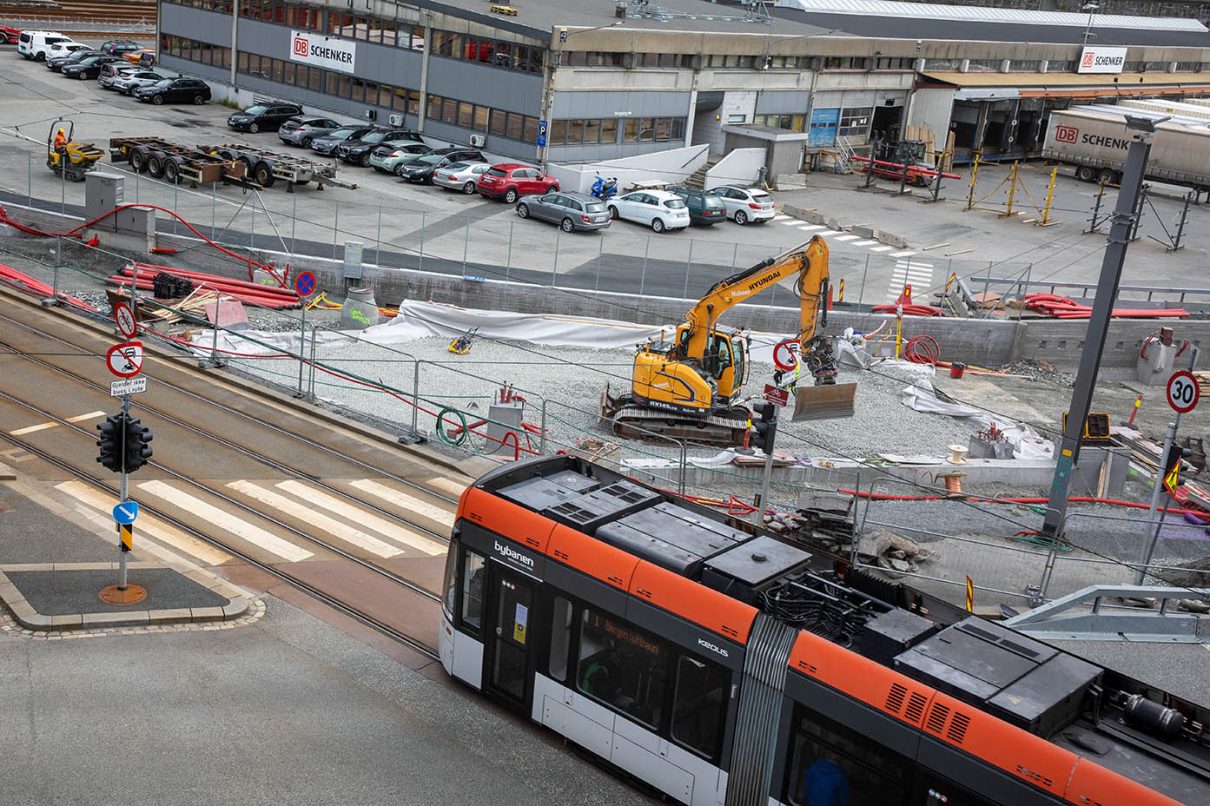
Lightweight Solutions for Urban Rail Infrastructure
Foam glass aggregates contain approximately 80% enclosed air, providing excellent thermal insulation properties.
Its insulating capacity helps maintain temperatures above freezing in frost-susceptible layers of the road structure, reducing the risk of frost heave and frost-related damage.
The material’s low weight also makes it easy to handle and install.
Once placed, foamed glass aggregate forms a stable layer that can be worked on directly. Installation and compaction can be carried out efficiently using conventional construction equipment.
The combination of stability, low weight, drainage capacity, and thermal insulation helps reduce the risk of settlements, water-related damage, and frost heave. This can contribute to lower maintenance requirements throughout the service life of the road.
Stations and Railway Infrastructure
Foamit foam glass can also be used in infrastructure related to railway operations, including station areas, platforms, and other supporting structures.
The expansion and modernization of railway systems often require larger platforms and new infrastructure. Many railway stations are located on flat areas with challenging ground conditions, where lightweight solutions are beneficial.
Due to its low weight, foamed glass aggregate enables construction on weaker soils while reducing lateral earth pressure against retaining structures. Its combination of low weight, stability, and efficient installation makes it well suited for projects where access is limited and construction must be carried out without unnecessary disruption to railway operations.